

What Did the Roaring Twenties Smell Like? Jazz, Gin, and Gardenia
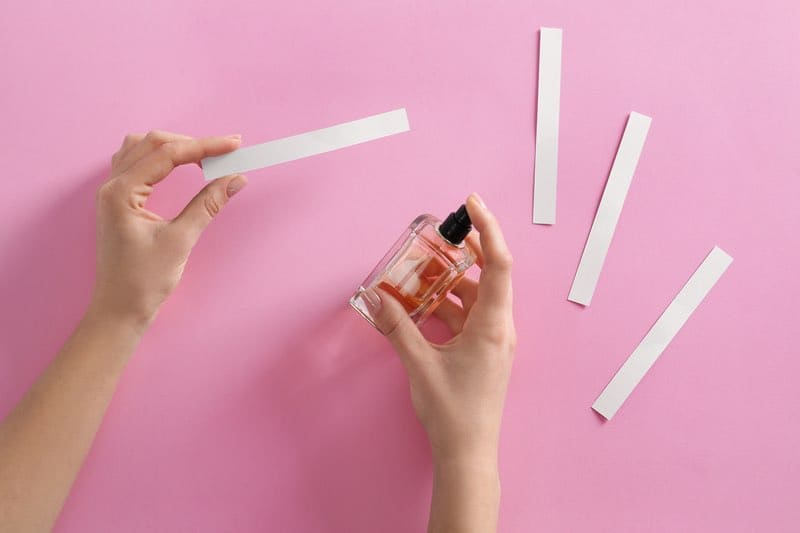
In the summer of 1920, somewhere on the French Riviera, a perfumer laid out ten small glass vials for a dressmaker to smell. They were numbered 1 to 5 and 20 to 24. Ernest Beaux had spent his career at Rallet, the house that supplied the Russian imperial court, and Coco Chanel is said to have asked him for something that smelled "like a woman, and not a rose".
She chose the fifth vial. Whatever was in it did not smell like a rose. It did not smell like jasmine, or amber, or any other thing a person could walk up to and touch.
For about four thousand years before that afternoon, perfume had been a way of carrying real objects around with you. Egyptian unguents held myrrh and cinnamon. Elizabethans wore ambergris off a whale and musk out of a deer. A Victorian violet water smelled of violets, and its whole ambition was to smell of violets more conveniently than violets did. Perfume was a report on the natural world, filed by the nose.
Then the twenties. Within a decade, the most talked-about scent in the world smelled of nothing you could point at, and that was the entire point of it.
What Were People Actually Wearing in the 1920s?
At the start of the decade, most women were wearing what their mothers had worn: single-note florals such as violet water, rose and lily of the valley, dabbed modestly behind the ears. By 1929 they were wearing aldehydes, amber, leather and tobacco, and not modestly.
The war did most of the pushing. Women who had driven ambulances and staffed munitions lines were in no mood to go back to violet water, and more of them were earning their own money, which meant buying their own scent rather than receiving it. What they wanted matched the rest of the life: hemlines up, hair off, cigarettes in public, champagne in rooms that did not officially exist.
The trade moved to meet them. Paul Poiret had founded Les Parfums de Rosine in 1911, the first fragrance house run by a couturier, and at the 1925 International Exhibition of Modern Decorative and Industrial Arts in Paris he showed the line from three decorated barges moored on the Seine. Not a stand. Barges. The same year Jean Patou released three fragrances sorted by hair colour: Amour Amour for blondes, Que Sais-Je? for brunettes, Adieu Sagesse for redheads, which is less a perfume launch than a filing system for customers. René Lalique, whose illuminated glass fountain was a landmark of the exposition grounds, was designing flacons that belonged on a plinth rather than a vanity.
By 1929 Patou was selling Le Sien, a chypre aimed at the woman who golfed, smoked and drove fast. The house pitched it as a masculine fragrance, made for women. Nobody in 1899 would have known what that sentence meant.

Which Roaring Twenties Perfume Changed the World?
Chanel No. 5, launched in 1921, and about half the story usually attached to it collapses on contact with the archive.
The legend is very good, which is why it has lasted. Beaux's assistant misreads a dilution and tips in ten times the intended quantity of aldehydes. The batch should be a ruin; instead it lifts off the blotter like nothing anyone has smelled, all cold air and warm linen and static electricity. Chanel takes the accident, names it for the fifth vial and her lucky number, and launches it on the fifth day of the fifth month of 1921. To test it, she has it sprayed around her table at a Riviera restaurant and watches the women turn their heads as they pass.
Almost every part of that is unprovable, and one part is close to certainly wrong.
Tilar Mazzeo, whose The Secret of Chanel No. 5 is the nearest thing we have to an archival history of the perfume, found no trace of a launch event on 5 May 1921 or any other day. No. 5 seems to have arrived quietly, pressed on favoured clients at the rue Cambon boutique, and the famous date looks like a story assembled afterwards to fit a number the house already owned. The restaurant demonstration survives in several incompatible versions that agree only on the method, which is not a creation myth so much as market research. The overdose is the part worth lingering on: perfume historians doubt the accident, because Beaux had worked deliberately with aldehydes for years and knew exactly what they did. The most likely account of the greatest accident in perfume history is that it was not an accident.
What nobody disputes is the effect. Aldehydes give a fragrance a sparkling, almost effervescent lift. They do not smell of a plant; they smell of scrubbed skin, cold air, a starched shirt taken off the line. Beaux used them at a volume no perfumer had risked, over rose, jasmine, ylang-ylang and sandalwood, reportedly around eighty materials in total, and the flowers dissolved into each other until no single one could be named.
That was the revolution. No rose at all.
What Was Shalimar, and Why Does It Still Matter?
Shalimar was Guerlain's great oriental of 1925: bergamot and lemon over jasmine and iris, sinking into a deep base of vanilla, tonka bean and incense. If No. 5 was the decade's cold sparkle, Shalimar was the warm smoke on the other side of the room.
Jacques Guerlain had made an early version in 1921, the same year as No. 5, but a dispute over rights to the name forced the house to sell it for a time as plain "No. 90", which is what glamour looks like when the lawyers get to it. The proper relaunch came at the 1925 Paris exposition, in a Baccarat crystal bottle by Raymond Guerlain.
The radicalism was chemical. Shalimar used the newly available synthetic ethylvanillin, several times stronger than natural vanillin, and used it without restraint. Beaux reportedly grumbled: "When I do vanilla, I get crème anglaise; when Guerlain does it, he gets Shalimar."
Then there is the name. Guerlain's own telling ties it to the Shalimar Gardens and the courtship of Emperor Shah Jahan and Mumtaz Mahal, the empress for whom he later built the Taj Mahal. The gardens at Lahore were finished in 1642. Mumtaz Mahal died in 1631. No courtship happened there, because there was no there yet.
We are a fragrance house, so we will say the useful part plainly: that is brand romance, not history, and it barely matters to what the bottle did. A perfume smelling of vanilla concentrated past anything a pod could produce was a perfume announcing that nature was now an ingredient, not a limit.
How Did the Fitzgeralds Smell?
Nobody wrote down Zelda Fitzgerald's perfume. Lore hands her Shalimar; no biographer supports it, and the assignment says more about how well the perfume fits her legend than about anything she owned. What can be reconstructed is the air the Fitzgeralds moved through, because Scott wrote so much of it down and, more usefully, because he kept accounts.
In his private ledger for 1923 he itemised the cost of being half the most famous young couple in America. Two lines: "house liquor", $80 a month, and "wild parties", $100. The confessional essay he published the following year, "How to Live on $36,000 a Year", lists golf clubs, dentistry and gambling losses, and no liquor whatsoever. It was 1924. Liquor was illegal.
Those two ledger lines buy you the room. From October 1922 the Fitzgeralds rented 6 Gateway Drive in Great Neck, Long Island, a modest house within smelling distance of Vanderbilt and Guggenheim money and next door to the newly rich of Broadway. The parties ran on gin and orange juice, the Orange Blossom being one of the era's most common cocktails and invented largely to disguise the spirit underneath. Add unfiltered smoke, orchid corsages pinned to silk, and whatever ambitious new bottle the women had bought that season. "America was going on the greatest, gaudiest spree in history," Scott wrote later, in his 1931 essay "Echoes of the Jazz Age", "and there was going to be plenty to tell about it."
Scent in his prose had gone electric. In The Great Gatsby, Daisy admires "the sparkling odor of jonquils and the frothy odor of hawthorn and plum blossoms and the pale gold odor of kiss-me-at-the-gate". That is a man writing smell as sensation rather than inventory, in the same years the perfumers were doing the same thing.
In May 1924 they sailed for France, partly for the quiet Scott needed and partly for money; he joked they were "off to the Riviera to economize". He wrote the bulk of The Great Gatsby at the Villa Marie in Valescure, in the hills above St-Raphaël, while Zelda swam at the beaches below. At Eden Roc she is said to have shed her evening dress and dived from rocks some forty feet above the sea. Around them, jasmine fields and pine resin, salt, aniseed and dark French tobacco.
The glamour and the wreckage, usually in the same evening, is why we keep coming back to the pair of them at Edenbridge. It is why we made North Shore, inspired by Scott, and Waltz, inspired by the fearless and far more complicated Zelda. Worn together they hold a conversation between two people who never established whether they were saving or destroying each other.


What Did a 1920s Speakeasy Actually Smell Like?
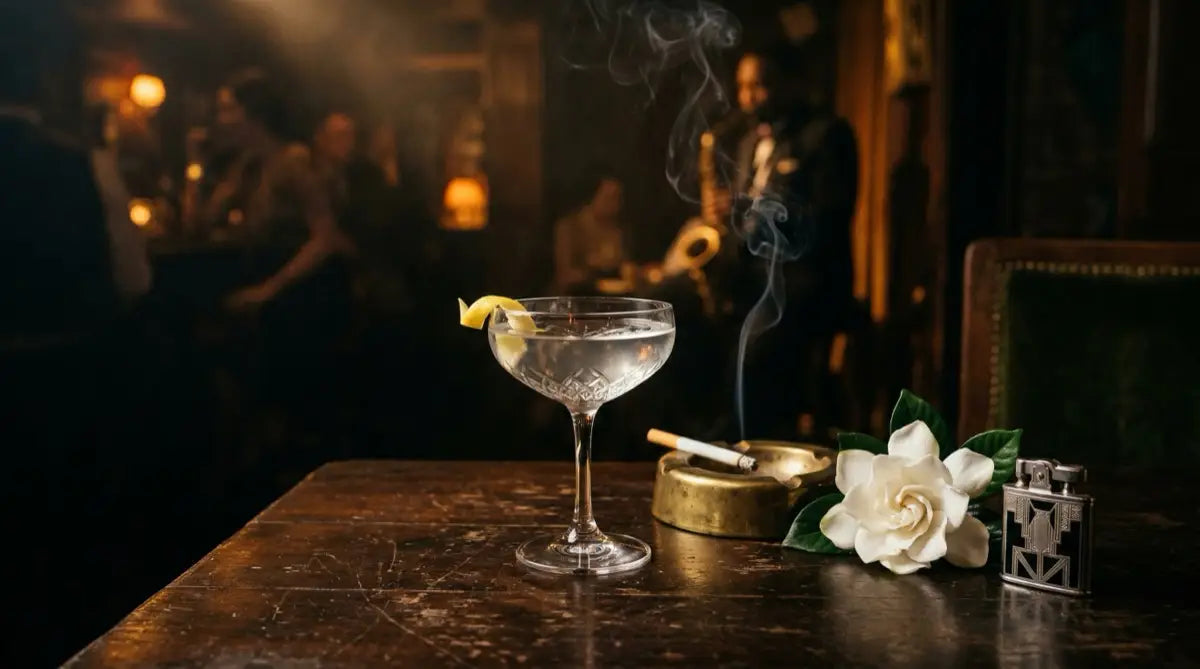
Tobacco smoke, raw gin, hot crowded bodies, brilliantine and heavy perfume, layered in roughly that order.
Smoke arrived first and never left. Cigarettes were unfiltered, and the leading American blends, Lucky Strike among them, carried a share of pungent Turkish leaf. It went into hair, curtains, wool and skin.
Then the gin, which was frequently not gin. Bootleg spirit was industrial alcohol cut with water, glycerine and juniper oil — the idea of juniper rather than the berry — and "bathtub gin" got its name from bottles being topped up at the bath tap, not from brewing in the tub. Citrus and sugar went in on top to cover the rest. Some doors demanded a password; plenty of others operated as private "clubs" that issued membership cards and hoped for the best.
Underneath sat the human part: dozens of dancers in a room built for far fewer, the Charleston generating real heat, face powder and sweat and the petroleum-and-flowers smell of brilliantine holding every man's hair flat.
Over all of it, the perfume. The women of the speakeasy era did not dab; they doused, because dabbing loses to tobacco. Molinard's Habanita had been created in 1921 to scent cigarettes and was reworked as a wearable perfume in 1924, bringing vetiver, tobacco and vanilla onto skin that had previously been offered flowers. Caron's Narcisse Noir, from 1911, was odd enough that Gloria Swanson showed off its bottle on screen in 1922. And through it all, the aldehydic shimmer of No. 5, cutting the smoke like a window opening.
By three in the morning everything applied at nine had burned through its top notes and was down to base: vanilla, vetiver, tobacco, warm skin. What survives eight hours is what a perfume actually is.
Smoke and gardenia, gin and jasmine, sweat and Shalimar. The twenties smelled like freedom behaving badly.

Why Do 1920s Fragrances Still Matter?
Because the decade changed what a perfume was for. Before the twenties, a fragrance was a portrait of something that existed. After them, it could be a portrait of an idea.
Every art form was making the same move. Painters had stopped painting apples; jazz took a melody and declined to stay near it. In Grasse and on the rue Cambon, perfumers discovered that a molecule with no origin in nature was not a defect to be hidden but the most modern material available. No. 5 argued a woman could smell abstract and unreadable. Shalimar declined to apologise for being sensual. Habanita handed her leather and smoke and let anyone who objected think it over.
Working in Kent a century later, we build fragrances around people rather than gardens, a habit the twenties invented. It is why a bottle can be named for Zelda Fitzgerald and nobody asks which flower she was.
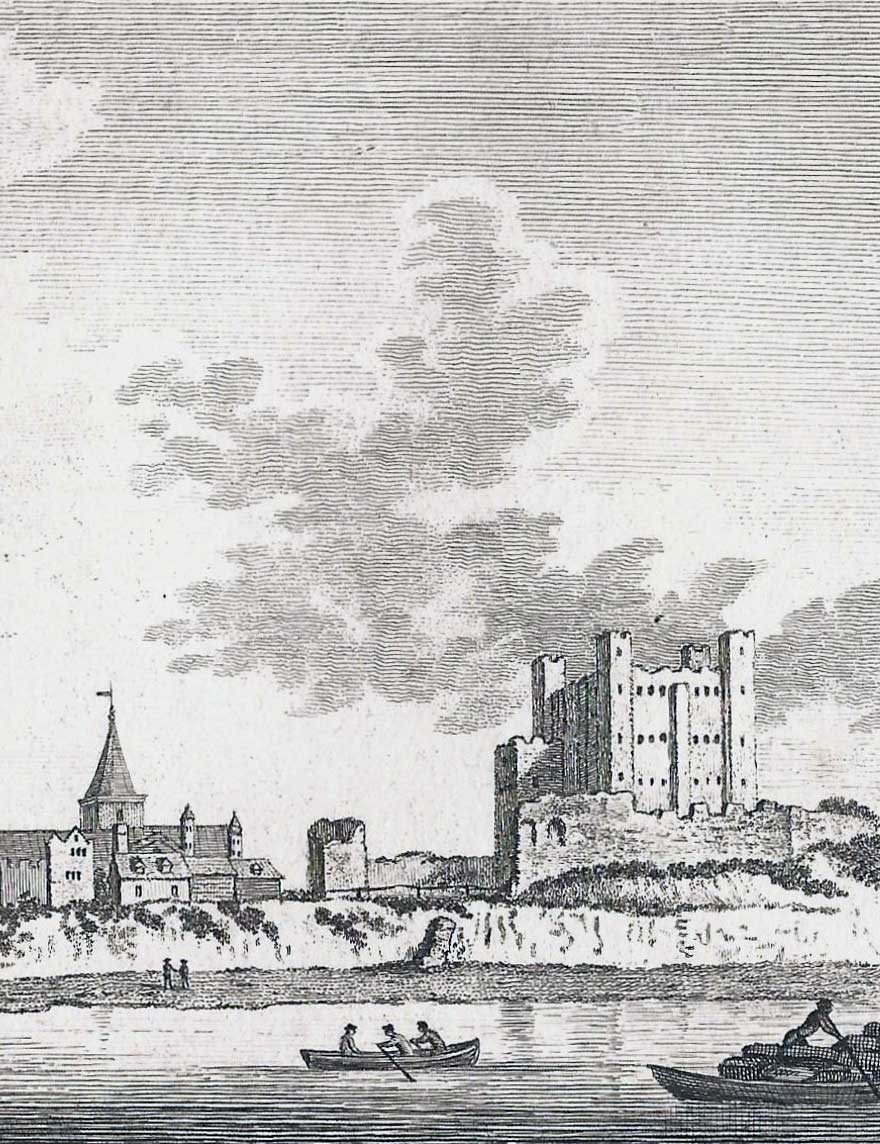
If you would like to smell the argument, our Portraits Sample Set covers the full Edenbridge collection, North Shore and Waltz included. For the world immediately before all this, when scent still meant citrus and rosemary and things you could grow, there is the story of Napoleon's cologne habit: a century earlier, and an entire philosophy away.
The spree ended in 1929, as sprees do. The molecules stayed.

Leave a comment
This site is protected by hCaptcha and the hCaptcha Privacy Policy and Terms of Service apply.